FASD Ireland Statement on the Incoming Government
NEW GOVERNMENT MISSES THE MARK WITH RECOGNISING IRELAND’S MOST PREVALENT NEURODEVELOPMENTAL CONDITION AS A DISABILITY – BUT THE DOOR IS LEFT OPEN
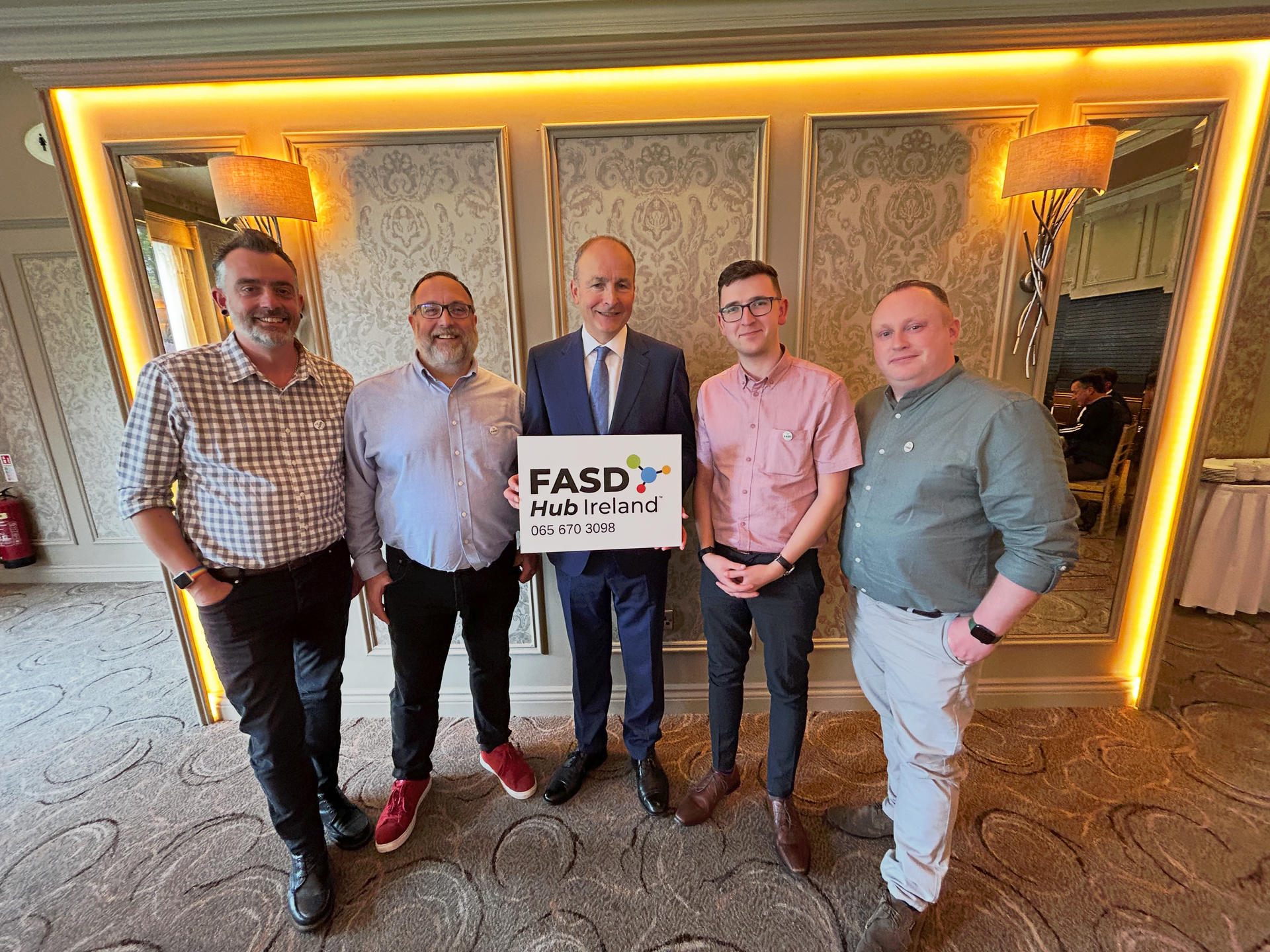
FASD IRELAND, the national organisation supporting people living with Foetal Alcohol Spectrum Disorder (FASD) and their families has congratulated incoming Taoiseach Mícheál Martin T.D., and incoming Tánaiste Simon Harris T.D.
“We would like to warmly congratulate An Taoiseach, An Tánaiste and their Government as they take office today. We have worked closely with our allies in Government and in Opposition in the previous Dáil and we look forward to working closely with the allies across this new Dáil to recognise, diagnose, and support people living with FASD, which is Ireland’s most prevalent neurodevelopmental condition. We will write to the Taoiseach, incoming Ministers for Health, Disability & Children, Justice & Domestic Affairs, and Education in the coming days to seek meetings that will progress public policy related to FASD and we look very forward to building positive and engaging relationships going forward.
“It is unfortunate and regrettable that no concrete commitments were set out in this Programme for Government to recognise FASD as a disability and to move forward with adopting standard criteria for diagnosis and support of FASD. As people may be aware, FASD is Ireland’s most prevalent neurodevelopmental condition. The HSE estimated in 2022 that up to 7.4% of our population live with FASD, which is just over 380,000 people. During the Programme for Government negotiations, FASD Ireland engaged with every single negotiator on our key asks for the Programme for Government, so it is disappointing not to see any strong commitments made to continue the tremendous work of Minister Anne Rabbitte in recognising FASD and introducing standard criteria for diagnosis and support.
“Nevertheless, we are hopeful, and we welcome a number of measures proposed. We believe that plans to regulate CAMHS is absolutely the right thing to do. The independent governance of CAMHS teams is an unacceptable practice that must be ended, and CAMHs must be brought in line with the rest of the Health Service to accept appropriate referrals and support service users for the conditions that they live with. We also strongly welcome the full implementation of the EPSEN Act, and we hope that the incoming Minister for Education and Minister for Children will work closely with ourselves and other key stakeholders to ensure that every child is supported, and none are failed by the system, to keep them in education and ensure that their additional needs are fully met.
“We welcome the strides made on better supporting people with disabilities throughout the State. However, as FASD is not a recognised disability, many of these proposed measures are completely inaccessible for people living with FASD. We need the Government to formally recognise FASD as a disability, which we call on them to do as a matter of priority.
“We also strongly welcome the Government’s commitment to continually review the number of conditions babies are screened for. Despite the fact that 1 in 10 babies are born with a form of FASD in this country, according to the HSE, there is no routine screening for the condition at any stage from birth to adulthood. FASD affects our country cross-sectionally, and we firmly believe that all babies born in the State should be screened for Foetal Alcohol Syndrome (FAS), and for wider prenatal alcohol exposure. In the range of tests a newborn baby currently receives, we screen for MSUD, a condition that affects 1 in every 155,200 babies, yet we don’t screen for FAS, which the HSE states approximately 600 babies are born with every year. This needs to change and the HSE need to include FAS as a condition that they screen for during the neonatal battery of tests.
“Despite its shortcomings, we acknowledge the good faith with which this Programme is presented, and we look forward to working with the incoming Government to proceed with the recognition of FASD as a disability and the adoption of a standard criteria for diagnosis and support.”