Clare County Council has heard calls for training on recognising FASD to be included in the curriculum for third level education.
CLARE FM - 11 March 2025
Clare County Council has heard calls for training on recognising FASD to be included in the curriculum for third level education. Upwards of 9,000 people are thought to be currently living with the disorder in Clare, despite not receiving a full diagnosis of the condition.
7.4% of the Irish population are estimated to be living with FASD, this equates to approximately 380,000 people across the country with 9,467 of those residing in Clare. Given at least one child in every mainstream classroom will live with the condition, calls have been made to ensure a module on neurological disorders is delivered as part of teacher training.
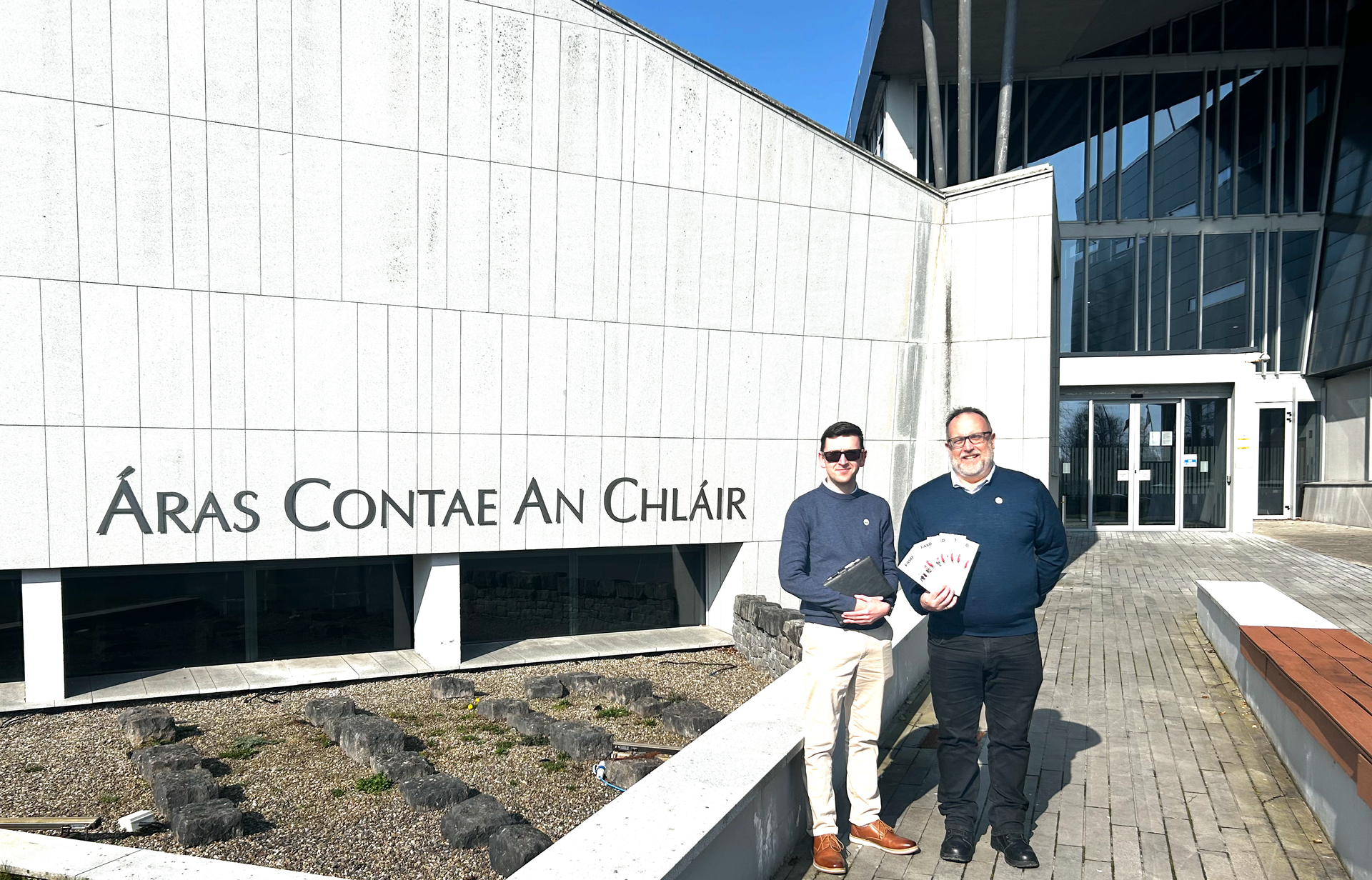
Director of Policy and Public Affairs at Ennis based FASD Ireland, Mike Taylor, claims the government to this point has failed to support those affected.
At present, Ireland is the only country in Europe which doesn’t acknowledge FASD as a disability. The disorder is the most prevalent Nuero-developmental disability and affects a greater number of people than autism, cerebral palsy and down syndrome combined.
CEO Tristan Casson-Rennie, claims there is a misconception within government that hospitals will be overwhelmed should the condition be officially recognised.
Four Clare councillors currently sit on the HSE Regional Health Forum West, while a number of others hold positions on school boards.
Shannon Banks Sinn Féin Councillor, James Ryan, says Clare holds a unique position from which it can incite change.
Full interviews with Tristan Casson-Rennie, Mike Taylor and Councillor Jame Ryan available from Clare FM below.
Tristan Casson-Rennie, CEO FASD Ireland speaks to Clare FM
Mike Taylor, Director of Policy & Public Affairs FASD Ireland speaks to Clare FM
Councillor James Ryan (SF) speaks to Clare FM